We're Off to See The Wizard

We're Off to See The Wizard

Friday, April 29, 2016

Yes, No, Maybe So: Joseph Conrad as a Racist


Scholars of literature have been deliberating a short but very powerful novel for years: Heart of Darkness. The question these scholars and many others have been arguing is whether or not Joseph Conrad, the author, was a racist. It was even banned from shelves and classrooms for the use of the “N” word and graphic violence- and still is in some cases. Even the famous author Chinua Achebe was sucked into this debate that has been going on for decades..
Heart of Darkness follows one white man’s horrific journey into a European colony. Aboard a British ship called the Nellie, three men listen to a man named Marlow recount his voyage in a steam boat as an agent for an ivory trading Company. Marlow says that he witnesses brutality and hate between the white ivory hunters and the native people. Marlow becomes entangled in a power struggle within the Company, and finally learns the truth about the mysterious Kurtz, a mad agent who has become both a god and a prisoner of the natives. After “rescuing” Kurtz from the native people, Marlow watches in horror as Kurtz falls victim to madness, disease, and finally death.
Much of Achebe’s argument stems from the idea that the natives that Marlow and Kurtz encounter are African. However, this is merely an assumption that readers make based on Conrad’s personal experience on the Congo River in Africa. However, it is important to note that the novella does not mention the Congo at all and mentions Africa only once as a place on a map and not as the location of Marlow's journey. If you don’t believe me check this out:
imageedit_4_5773557122.jpg
imageedit_7_8417156949.jpg

In addition to no concrete location, the place that Conrad describes is synonymous with other British colonies during the 1800s, especially their colonies Southeast Asia, which were also big producers of ivory and have a similar geography.
Nonetheless, I can agree that Conrad’s descriptions of the natives are detestable and derogatory. They are seen as and referred to as savages. The Narrator describes the location and its indigenous people: “It was unearthly and the men were — no, they were not inhuman. Well, you know that was the worst of it — this suspicion of their not being inhuman. It would come slowly to one. They howled and leaped and spun and made horrid faces but what thrilled you was just the thought of their humanity — like yours — the thought of your remote kinship with this wild and passionate uproar.” The indirectly invective language describing the people carries on throughout the novella, considering them less than human and savage. However, Conrad’s descriptions are aligned with the attitudes of most Europeans in the late 1800s when the novel was written. If anything, these descriptions are a historically accurate testament to how the Europeans looked upon the new lands and people they were going to colonize. They would enter a society and hear new languages which sounded like garbled noise. To most anyone, a foreign language just sounds like a bunch of noises, so can we blame Conrad for such a description of the natives communication? Also, upon entering a new region for colonization, the Europeans recognized the lack of development and rituals and traditions that seemed barbaric by their own standards. Thus, they considered these people as savage and uncivilized.
We, as readers, must also consider who’s opinion we are really receiving. Due to the narrative frame, the opinions of Conrad are blurred. We have a narrator reporting Marlow’s narration of Marlow’s experiences. This is a story inside another story, inside a story. Technically, Heart of Darkness ceases to be Conrad’s tale and therefore if the text is racist, then Conrad is not necessarily racist himself. The novella operates from several points of view. So we can keep asking: who is really the racist here? Achebe believes Marlow speaks for Conrad’s racism because Conrad does “not hint, clearly and adequately at an alternative frame of reference by which we may judge the actions and opinions of his characters.” But, the idea that the narrative frame is so ambiguous seems to mask Conrad’s opinion and the opinions of the characters, so it is only a speculation that the seemingly racist comments are from Conrad’s personal beliefs.
In addition, we must consider the greater purpose of the novella to understand that Conrad is not overtly racist. Ultimately, Conrad reveals the “darkness” within all human beings. We must not forget that the natives are not the only savages - the Europeans are too. The natives and the whites descend to inhumane levels of thought and behavior — like Kurtz and the whole colonial establishment. The language used to describe the natives revealed the effect of the wild on them. Just as the doctor said “the changes take place inside” when you venture into that type of environment, which is why we also see the savage within the white men.
I cannot affirmatively say that Conrad was or was not racist or determine if Heart of Darkness was a racist text because I didn't even know the guy. So if you ask me, I’ll just say “yes, no, maybe so.”

Friday, April 1, 2016

Emily Brontë Must Have Studied Psych


I was talking to my sister about how my back up plan in college was to major in Psychology. After her complaints about her psychology courses for her Pre-Law requirements, I asked about what she was covering in class. She told me she was going over some of Sigmund Freud's ideas about the human psyche. One of Freud's ideas was that the human psyche is divided into three parts: the id, the superego and the ego. Oddly enough, the three parts coincide very closely with Heathcliff, Edgar and Catherine respectively! It was kind of funny. I did a little bit more research on my own to make sure I had an understanding of Freud's principles of the structure of the human personality. 

Follow the hyperlink below for more information!

The Id: Heathcliff
According to Freud, the id is childish and impulsive operating on the "pleasure principle." The pleasure principle basically is the idea that someone will do as he or she pleases to gain pleasure or desires without consideration of the consequences. Heathcliff is the epitome of this part of the human psyche, so he functions as the id in Wuthering Heights. Heathcliff often fulfills his own desires impulsively and does not take into consideration the effects of his actions. Even if it means torturing Hindley, Hareton and Cathy because of what happened to him in the past. He even goes so far as to bribe the sexton to dig up Catherine's grave because he wants to see her again-which is impulsive and rather grotesque behavior. Heathcliff tends to act without thought because he seeks revenge and whats to be with Catherine. He follows the behavior that instinctively comes to him, as the id would. Because he was tormented as a child, his instinctive reaction is to torment those who harmed him. Who wouldn't have that reaction? (at least internally want to.) He loves Catherine, so he would do anything to be with her even if it meant digging up her grave. Although extreme, many of us have a similar thought process, asking for the ones we love to come back to us. 


The Superego: Edgar
Freud identified the superego as the moralizing part of the human psyche- the part of us that follows values and moral codes prescribed by society. Edgar Linton is the paragon of the superego. Edgar is a gentleman and is well-off financially. He is an enemy to Heathcliff, which makes sense because they are direct opposites. He sees Heathcliff as barbaric and uncivilized because he is the id. Edgar even disapproves of Hareton because he is Heathcliff's son because he is associated with the uncivilized nature attached to Heathcliff. Edgar is the part of the psyche that people strive to become- the "ideal self."


The Ego: Catherine
The ego, as described by Freud is the decision making part of the human personality, which often fluctuates between the unrealistic id and the more realistic superego. Like the superego, Catherine struggles between the id (Heathcliff) and the superego (Edgar). She loves Heathcliff because that is what she instinctively wants but because of what society has taught her about being a prim and proper lady, she loves Edgar as well, as he is the ideal. The superego operates on the "realistic principle," striving to fulfill the demands of id but also following the ideals of the superego. Essentially, the ego tries finds a realistic way to obtain pleasure. Catherine does something similar. She stays with Edgar to make those around her believe she is the ideal woman. However, in private she is still madly in love with Heathcliff and ends up with him in the afterlife. The ego is often a weak relative to the id and can only hope to point the id in the right direction. Catherine tries to guide Heathcliff to do the right thing-and not say anything horrible about being happy that Hindley's wife, Frances, had died. But, Catherine only succumbs to the ids instinctive and impulsive power. Heathcliff keeps his hold on Catherine even in her death and she never loses her unrelenting love for him. 

Friday, February 26, 2016

"Base Details"- A Criticism of Military Misconduct


Siegfried Sassoon utilizes understatement, irony and visual imagery to show the disparity between how poorly soldiers are treated and how the high ranking officials treat themselves in the military in his poem Base Details. It highlights the agitation and disgust the speaker (who may be a soldier based on the knowledge he or she has about the details of the military) has towards the superior authorities because the visual imagery used to describe them is quite mocking and a little invective.
Sassoon includes an understatement to show the lack of care the high ranked officials and Majors in the military have for the lives of the soldiers and what the soldiers endure in combat. An understatement is the presentation of something as being less important or not as bad as it actually is. In line 8, there is an understatement, as the battles of war in which many lives were lost is described as a "scrap." The word scrap is generally used as a description of a a small quarrel that is minor or unimportant. This shows how the superior officers in the military do not exalt the soldiers and the battles they face-making the soldiers dispensable and insignificant. Everyone knows war is a serious battle where thousands upon thousands of people die, so the fact that the war is considered a "scrap" illuminates the idea that the high ranked officers believe the soldiers lives do not matter.
The insensitivity of the high ranked officers in the military is also highlighted by the use of direct speech and verbal irony. Sassoon undermines the sensitivity of the officials (in a way it is another understatement) with the statement that he has known the father of the "poor young chap" well which implies that that is the reason he feels sorry for the soldier (line 6). This creates a sense of irony as the official is saying one thing but means another because it is clear that the officer does not really care about the soldier with such a sarcastic undertone. Also the use of the pronoun "we" in line 8 creates a sense of irony as well since it is evident that that the soldiers and high ranked officials live totally different lives, yet the word we suggests togetherness.
While the soldiers are living trivial lives and fighting in little quarrels, the higher ranked officers live in the lap of luxury, treating themselves to the best of the best. They get to over indulge on drinks at the "best hotel[s]" and go "safely home" at the end of every day (line 5, line 10). The contrast between the "glum heroes" going to their deaths and the officials destination to the "best hotels" is poignant and creates a stress on the misconduct in the military (line 3, line 5). Meanwhile, the soldiers are dying in battle. Clearly, the speaker is rather disgusted by the disparity between the lives of the soldiers and those of the officials because of the mocking, invective tone of the visual imagery used to describe the officials. They are described as "fierce" and "short of breath" which is just a way of calling them all cut throat, out of shape and over weight (line 1). Language like this alone denotes a negative image of these high ranked officials and a general dislike of them. The speaker is clearly aggravated by the officials for treating the soldiers so poorly and having a general disregard for the soldier's lives.

Wednesday, January 27, 2016

All Blog Posts Are Equal, But Some Are More Equal Than Others


Here’s to finishing off another novel! Animal Farm was a not so boaring read and was rather humorous. However, on the surface it seemed like George Orwell was just being a clown, but in reality it was just a way to create his satirical novel.  Satire is the use of humor, sarcasm, irony, or exaggeration to expose the flaws or vices of individuals, institutions, or groups (including their ideas, claims, and proposals).  Orwell criticizes the ineffectiveness of totalitarianism because of the outcome they achieved after they overthrew the czar. He does so by utilizing situational irony. We think that since because the animals rule the farm, they will have a utopia. However, the pigs become dominant, and they have a utopia while the other animals suffer from misery. The animals overthrow Jones and his family but as their leadership forms, the reader sees direct relationship between the new leadership and the rule of Jones. By the end of the story, the pigs, or the new leaders of farm, have become exactly like the humans to the point where the animals can see no difference between the two. Therefore, only a worse situation came out of the revolution because the animals had worse living conditions than before. Orwell also criticizes the people who do not stand up for what they believe and follow the revolutionaries while ignoring the future outcomes of their actions. For example, the animals follow blindly after the pigs not realizing who would be the governing body and how they would get supplies they could not get from the farm like food and parts for the windmill. Another criticism is directed to the people who are power hungry like the pigs. They start as one of the group and work for the good of everyone, but their motivation slowly changes to focus on just them and how they can benefit in the end. Orwell, also criticizes the way individuals believe everything the authority tells them by using dramatic irony. We know that the pigs (Squealer) are changing the commandments, but the other animals are clueless. We know that Boxer was slaughtered while the other animals think he died in the veterinary clinic, even though he was given lots of expensive medicines that Napoleon supposedly paid for. We recognize that the pigs are slowly taking over little by little, while the other animals do not realize that every move the pigs make means less freedom for them. Ultimately, Orwell utilized different types of irony to criticize totalitarian government: absolute power corrupts absolutely. As in the novel, the three not so little pigs struggle to maintain absolute power, controlled every aspect of the farm is nearly impossible. They begin using propaganda and lying to the other animals of the farm in order to exact their power, but eventually everything falls apart. But this is not just true in the novel-but throughout history. Major rulers including Stalin and Hitler (we all know how that worked out…) tried to maintain complete control over their nations by poisoning the minds of their citizens through education and propaganda, but guess what? The USSR disintegrated and so did the Third Reich. So Orwell  made a very valid statement through his satirical novel: absolute power corrupts absolutely. If you disagree, I challenge you to find me a true dictatorship or totalitarian government that worked out and is thriving.

Wednesday, January 20, 2016

Animal Farm: A Satirical View of Soviet Russia


 'ALL ART IS PROPAGANDA'

-GEORGE ORWELL

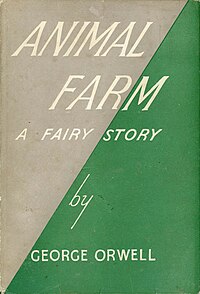
Animal Farm - 1st edition.jpg
First Edition Book Cover 1945
*CAUTION: SPOILERS*

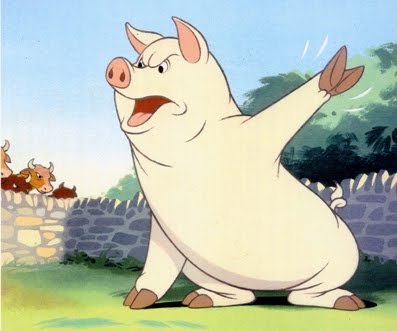
Back in eighth grade, I was supposed to read Animal Farm by George Orwell, but in all honesty, I skipped out and watched both the cartoon movie version and the live action version of the novel. (No one rat on me to my old English teacher, please and thank you). Now, I am taking the time to read the novel and really understand it because I am older and maturing as a reader. Orwell wrote the novel between November 1943 and February 1944, when the UK was in its wartime alliance with the Soviet Union and the British people and intelligentsia held Stalin in high esteem, a phenomenon Orwell hated. Thus, it becomes very apparent that Orwell makes many invective criticisms of Soviet Russia by using his characters as allusions and allegories of major parts of the USSR.


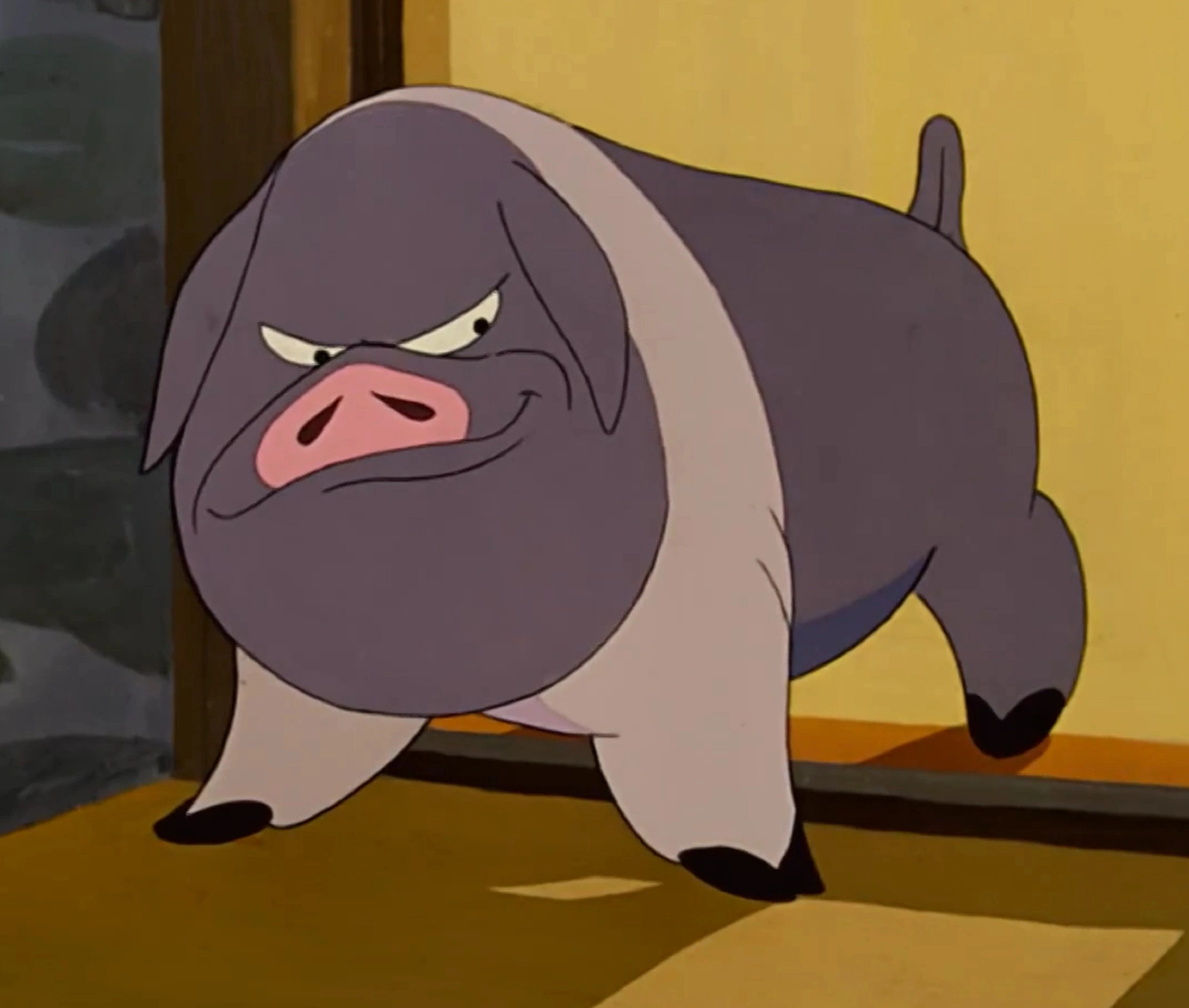
Napoleon

Napoleon is representative of Stalin. Napoleon is the antagonist of the book and uses the revolution and the power he gains for his own selfish desires. Napoleon has many of the animals executed after they confess to their crimes. ‘Napoleon now called upon them to confess their crimes. They were the same four pigs as had protested when Napoleon abolished the Sunday Meetings. Without any further prompting they confessed that they had been secretly in touch with Snowball ever since his expulsion, that they had collaborated with him in destroying the windmill...When they had finished their confession the dogs promptly tore their throats out’ (page 56). This is an allusion to the show trials by Stalin in Russia in the 1930's, where political opponents were eliminated after an apparent trial and confession. As the narrative develops Napoleon’s rule becomes more atrocious, as he becomes a dictator, using terror and propaganda to control the other animals and prevent a second revolt against him.

Snowball

Snowball is representative of Trotsky, one of Stalin’s biggest political rivals in Russia before he was exiled from the USSR in 1927. Like Trotsky, Snowball is also exiled because he was a political threat and rival. These two disagreed at every point where disagreement was possible’’(page 31). Orwell does not present Snowball as the protagonist or the good one; Snowball is portrayed as being unrelenting and brutal too. When Boxer expresses regret at killing a human, Snowball says “War is war. The only good human being is a dead one’’ (page 28). This is a reference to Trotsky’s ruthlessness while turning the Red Army into a fighting force in the Russian Civil War. Napoleon's dogs later chase Snowball off the farm-which is similar to Stalin ridding the USSR of Trotsky for the threat he posed to Stalin’s power.


The Dogs

The dogs represent the secret police or the NKVD in the Soviet Union. The dogs are important to Napoleon in maintaining his power and preventing another revolution. They aid in Napoleon's executions and enforce his laws. The dogs eliminate the greatest threat to Napoleon’s power as ‘nine enormous dogs wearing brass-studded collars came bounding into the barn. They dashed straight for Snowball, who only sprang from his place just in time to escape their snapping jaws...’ (page 35-36). For their loyalty, the dogs are treated better by the pigs than the other animals on the farm. They are part of Napoleon’s campaign of terror to maintain his control over the farm.


The Pigeons

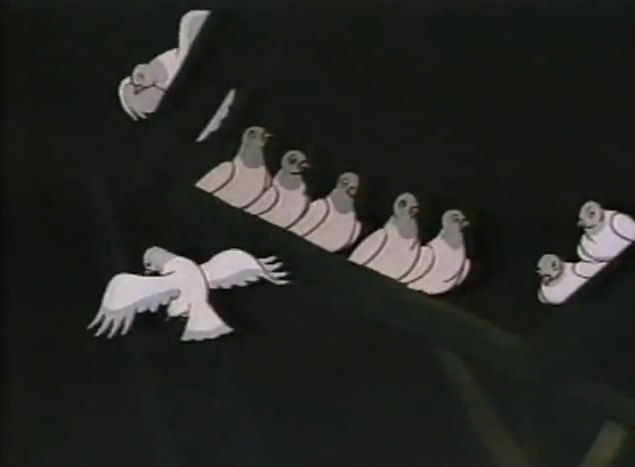
Although the pigeons are minor characters, they represent the Soviet Union’s propaganda as a means to manipulate and indoctrinate the public. The Soviet Union under Stalin, often boasted of great achievements both economically and socially despite internal problems. Snowball and Napoleon use the pigeons to spread propaganda and send messages to other farms.
If you want to skip out on the book like I did, or would just like to see the movie here’s the original animated film!

Saturday, January 9, 2016

And The Verdict Is...


*WARNING: SPOILERS*

In William Shakespeare's Othello, tragedy might be an understatement. There were many characters who died including Othello, Desdemona, Emilia, and Rodrigo. But who was to blame for this unfortunate turn of events? This question has been asked since the play's publication. Many say that the obvious person to blame is Iago, considering he was the one who deceived every character in the play and seemed to set the tragic events in motion. I, however, believe that Othello is to blame. Not only was he fast to trust a man he barely knew, but he believed him enough to act upon his words. If he had simply taken the time to ask questions and do his own research, the tragic end of the play could have been avoided.
The first question that I had when reading this play was how long had Othello known Iago. Considering Iago’s lower rank, one could draw the conclusion that Othello was not in Iago's company on a day to day basis. This means that they must have just started talking when the play began. So, why did Othello trust him so much? He trusts him more than he trusts his own wife! I mean really, who believes someone they barely know when they come up and tell them that their wife was cheating on them? It is because of Othello’s trusting nature that the events of the play were set into motion. Othello is blind. He is not literally blind, but he fails to see Iago’s true motives to destroy him and is instead very trusting. Othello refers to Iago as “honest Iago,” relying on him to expose the details of the scuffle between Cassio and Montano and for information throughout the play. Clearly Othello trusts Iago, but Iago, as the audience knows, is anything but trustworthy, as he plans to destroy Othello for not promoting him to lieutenant and for a rumor that he slept with his wife. This trust continues throughout the beginning of the play, even when Iago lies to Othello about an affair between Desdemona and Cassio. Othello trusts what Iago tells him because “thou’rt full of love and honesty” (44). Yet, Iago makes up stories of the affair and warns Othello to be weary of their relationship. Othello’s blindness towards Iago’s disloyalty leads to his own demise. Because he trusts Iago, even though he barely knows him, he plays right into Iago’s egregious plot to destroy him. Othello grows angry and seeks revenge for a love affair that doesn’t exist which leads to some hasty decisions which result in the death of his own wife, himself, Emilia and Rodrigo. If Othello hadn’t listened to Iago, none of the events in the play would have happened.
I also wondered why Othello believed Iago's ridiculous claims and acted upon them. If someone came up to me and told me that my husband was cheating on me, I wouldn't believe them. Sure, I would contemplate the idea and might ask my husband about the accusation, but I wouldn't talk about it with the person who accused him in the first place; it is none of their business anyways. Othello should have done his own investigation. I'm not saying he should have gone full Sherlock Holmes or anything, but he could have at least listened in on some conversations between his wife and Cassio. This may have showed him that nothing was going on between them and he wouldn't have gone completely crazy with jealousy. Othello's jealousy and paranoia feeds on itself. Othello only needed a seed of doubt from Iago to germinate in his head before it became a full blown obsession. Because of his jealousy, Othello was the person who brought up the idea of killing Cassio and Desdemona and he employed Iago to actually kill Cassio. He exclaims, “O, blood, blood, blood!,” seeking a fatal revenge on the two which would not end well for him. I know that people say jealousy is something we cannot control, but how can you be jealous over something that isn't even real?
Whether or not you believe Othello is the one to blame for the tragic outcome of Othello, you can't deny that he set some tragic events in motion. Iago can only be perceived as guilty of telling Othello his speculations, but Othello took it upon himself to not only believe him but act on suspicion rather than fact. So what’s the verdict? Othello is guilty- of his own tragic downfall.

Wednesday, November 18, 2015

Fingerprints

How do we respond to outside influences while remaining true to ourselves?

     So often we lose ourselves by conforming to external influences. We become who other's want us to be. But what separates the roles we take on from our true sense of self is the fact that we begin to change our own values, our own ideas, our own opinions-everything that sets us apart- to agree with the multitudes of society. It is even easier to conform to outside influences when we lose sight of who we are. Ralph Ellison captures these ideas through his unnamed protagonist. Invisible Man is a novel that explores the idea that one can lose his or her identity because of external forces. The Invisible Man serves as a symbol of not only African American individuals who took on prescribed roles in society, but all people who have struggled to remain true to themselves when society wants them to be someone else. 
     The Invisible Man struggled to find his own identity because of the social climate in 1930s America. Thus, he allowed society to define him-taking on the roles people wanted him to. As the narrator states in the novel's opening, “All my life I had been looking for something, and everywhere I turned somebody tried to tell me what it was.” The narrator’s blackness comprises a large part of his identity, although this is not something he has necessarily chosen. As a result of the racist environment, the narrator is invisible. He does not have supernatural powers to make himself disappear, but he is invisible because the world around him refuses to see him.
     However, invisibility did not stem from racism alone. The Invisible Man's sense of self became blurred when generalizations about his identity were cast upon him- making him seem like a drone rather than an individual. This becomes evident at the unnamed black university and at Liberty Paints. However, it is the Brotherhood, an obscure organization that claims to a black activist group, that proves to be most disillusioning for the narrator. The Brotherhood gives The Invisible Man a new name and a list of prescribed rules-essentially redefining who he is as a person. He allowed others to define who he was- failing to remain true to himself while the world impacted him. 
     Like the Invisible Man, I believe that we as people all struggle at some point to remain true to ourselves despite outside influences. There was a time when I believed there was this handbook I had never gotten that explained how to be. I was conscious of how I sat, how I smiled, how I spoke. I wondered if everyone I knew would go home and exchange notes on how I didn't quite fit or something worse: maybe they wouldn't notice. So I tried to pick up the patterns. I wore what they wore and I said what they said. In time, I made a version of myself that fit in (whatever that means). As time continued, the patterns kept changing and it took too much energy to try and keep up. Then I realized something: even though there is a thing called fitting in, it isn't something you can learn and practice. I realized that the way to become natural or be myself was to forget who I was trying to be to other people. And if there is a handbook, you probably get to write it yourself.