We're Off to See The Wizard

We're Off to See The Wizard

Wednesday, January 27, 2016

All Blog Posts Are Equal, But Some Are More Equal Than Others


Here’s to finishing off another novel! Animal Farm was a not so boaring read and was rather humorous. However, on the surface it seemed like George Orwell was just being a clown, but in reality it was just a way to create his satirical novel.  Satire is the use of humor, sarcasm, irony, or exaggeration to expose the flaws or vices of individuals, institutions, or groups (including their ideas, claims, and proposals).  Orwell criticizes the ineffectiveness of totalitarianism because of the outcome they achieved after they overthrew the czar. He does so by utilizing situational irony. We think that since because the animals rule the farm, they will have a utopia. However, the pigs become dominant, and they have a utopia while the other animals suffer from misery. The animals overthrow Jones and his family but as their leadership forms, the reader sees direct relationship between the new leadership and the rule of Jones. By the end of the story, the pigs, or the new leaders of farm, have become exactly like the humans to the point where the animals can see no difference between the two. Therefore, only a worse situation came out of the revolution because the animals had worse living conditions than before. Orwell also criticizes the people who do not stand up for what they believe and follow the revolutionaries while ignoring the future outcomes of their actions. For example, the animals follow blindly after the pigs not realizing who would be the governing body and how they would get supplies they could not get from the farm like food and parts for the windmill. Another criticism is directed to the people who are power hungry like the pigs. They start as one of the group and work for the good of everyone, but their motivation slowly changes to focus on just them and how they can benefit in the end. Orwell, also criticizes the way individuals believe everything the authority tells them by using dramatic irony. We know that the pigs (Squealer) are changing the commandments, but the other animals are clueless. We know that Boxer was slaughtered while the other animals think he died in the veterinary clinic, even though he was given lots of expensive medicines that Napoleon supposedly paid for. We recognize that the pigs are slowly taking over little by little, while the other animals do not realize that every move the pigs make means less freedom for them. Ultimately, Orwell utilized different types of irony to criticize totalitarian government: absolute power corrupts absolutely. As in the novel, the three not so little pigs struggle to maintain absolute power, controlled every aspect of the farm is nearly impossible. They begin using propaganda and lying to the other animals of the farm in order to exact their power, but eventually everything falls apart. But this is not just true in the novel-but throughout history. Major rulers including Stalin and Hitler (we all know how that worked out…) tried to maintain complete control over their nations by poisoning the minds of their citizens through education and propaganda, but guess what? The USSR disintegrated and so did the Third Reich. So Orwell  made a very valid statement through his satirical novel: absolute power corrupts absolutely. If you disagree, I challenge you to find me a true dictatorship or totalitarian government that worked out and is thriving.

Wednesday, January 20, 2016

Animal Farm: A Satirical View of Soviet Russia


 'ALL ART IS PROPAGANDA'

-GEORGE ORWELL

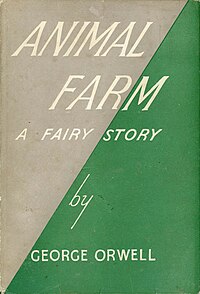
Animal Farm - 1st edition.jpg
First Edition Book Cover 1945
*CAUTION: SPOILERS*

Back in eighth grade, I was supposed to read Animal Farm by George Orwell, but in all honesty, I skipped out and watched both the cartoon movie version and the live action version of the novel. (No one rat on me to my old English teacher, please and thank you). Now, I am taking the time to read the novel and really understand it because I am older and maturing as a reader. Orwell wrote the novel between November 1943 and February 1944, when the UK was in its wartime alliance with the Soviet Union and the British people and intelligentsia held Stalin in high esteem, a phenomenon Orwell hated. Thus, it becomes very apparent that Orwell makes many invective criticisms of Soviet Russia by using his characters as allusions and allegories of major parts of the USSR.


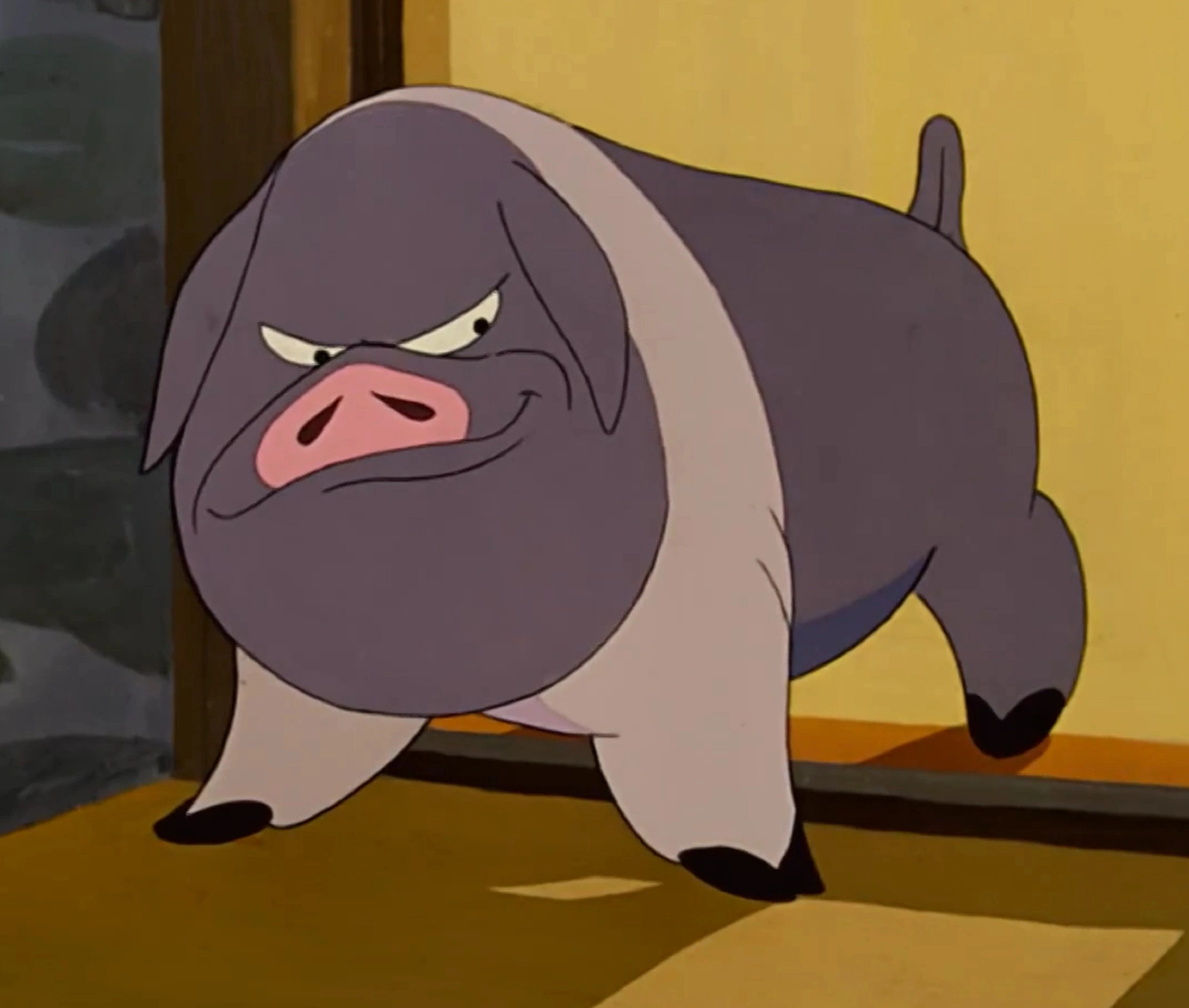
Napoleon

Napoleon is representative of Stalin. Napoleon is the antagonist of the book and uses the revolution and the power he gains for his own selfish desires. Napoleon has many of the animals executed after they confess to their crimes. ‘Napoleon now called upon them to confess their crimes. They were the same four pigs as had protested when Napoleon abolished the Sunday Meetings. Without any further prompting they confessed that they had been secretly in touch with Snowball ever since his expulsion, that they had collaborated with him in destroying the windmill...When they had finished their confession the dogs promptly tore their throats out’ (page 56). This is an allusion to the show trials by Stalin in Russia in the 1930's, where political opponents were eliminated after an apparent trial and confession. As the narrative develops Napoleon’s rule becomes more atrocious, as he becomes a dictator, using terror and propaganda to control the other animals and prevent a second revolt against him.

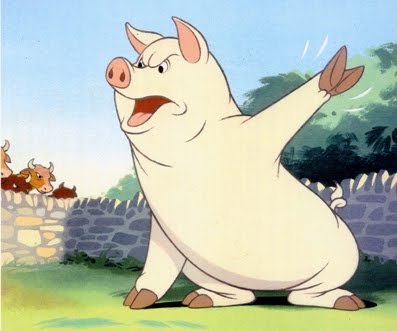
Snowball

Snowball is representative of Trotsky, one of Stalin’s biggest political rivals in Russia before he was exiled from the USSR in 1927. Like Trotsky, Snowball is also exiled because he was a political threat and rival. These two disagreed at every point where disagreement was possible’’(page 31). Orwell does not present Snowball as the protagonist or the good one; Snowball is portrayed as being unrelenting and brutal too. When Boxer expresses regret at killing a human, Snowball says “War is war. The only good human being is a dead one’’ (page 28). This is a reference to Trotsky’s ruthlessness while turning the Red Army into a fighting force in the Russian Civil War. Napoleon's dogs later chase Snowball off the farm-which is similar to Stalin ridding the USSR of Trotsky for the threat he posed to Stalin’s power.


The Dogs

The dogs represent the secret police or the NKVD in the Soviet Union. The dogs are important to Napoleon in maintaining his power and preventing another revolution. They aid in Napoleon's executions and enforce his laws. The dogs eliminate the greatest threat to Napoleon’s power as ‘nine enormous dogs wearing brass-studded collars came bounding into the barn. They dashed straight for Snowball, who only sprang from his place just in time to escape their snapping jaws...’ (page 35-36). For their loyalty, the dogs are treated better by the pigs than the other animals on the farm. They are part of Napoleon’s campaign of terror to maintain his control over the farm.


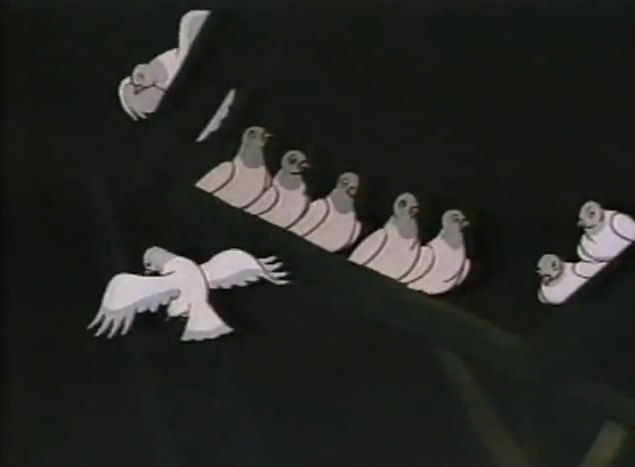
The Pigeons

Although the pigeons are minor characters, they represent the Soviet Union’s propaganda as a means to manipulate and indoctrinate the public. The Soviet Union under Stalin, often boasted of great achievements both economically and socially despite internal problems. Snowball and Napoleon use the pigeons to spread propaganda and send messages to other farms.
If you want to skip out on the book like I did, or would just like to see the movie here’s the original animated film!

Saturday, January 9, 2016

And The Verdict Is...


*WARNING: SPOILERS*

In William Shakespeare's Othello, tragedy might be an understatement. There were many characters who died including Othello, Desdemona, Emilia, and Rodrigo. But who was to blame for this unfortunate turn of events? This question has been asked since the play's publication. Many say that the obvious person to blame is Iago, considering he was the one who deceived every character in the play and seemed to set the tragic events in motion. I, however, believe that Othello is to blame. Not only was he fast to trust a man he barely knew, but he believed him enough to act upon his words. If he had simply taken the time to ask questions and do his own research, the tragic end of the play could have been avoided.
The first question that I had when reading this play was how long had Othello known Iago. Considering Iago’s lower rank, one could draw the conclusion that Othello was not in Iago's company on a day to day basis. This means that they must have just started talking when the play began. So, why did Othello trust him so much? He trusts him more than he trusts his own wife! I mean really, who believes someone they barely know when they come up and tell them that their wife was cheating on them? It is because of Othello’s trusting nature that the events of the play were set into motion. Othello is blind. He is not literally blind, but he fails to see Iago’s true motives to destroy him and is instead very trusting. Othello refers to Iago as “honest Iago,” relying on him to expose the details of the scuffle between Cassio and Montano and for information throughout the play. Clearly Othello trusts Iago, but Iago, as the audience knows, is anything but trustworthy, as he plans to destroy Othello for not promoting him to lieutenant and for a rumor that he slept with his wife. This trust continues throughout the beginning of the play, even when Iago lies to Othello about an affair between Desdemona and Cassio. Othello trusts what Iago tells him because “thou’rt full of love and honesty” (44). Yet, Iago makes up stories of the affair and warns Othello to be weary of their relationship. Othello’s blindness towards Iago’s disloyalty leads to his own demise. Because he trusts Iago, even though he barely knows him, he plays right into Iago’s egregious plot to destroy him. Othello grows angry and seeks revenge for a love affair that doesn’t exist which leads to some hasty decisions which result in the death of his own wife, himself, Emilia and Rodrigo. If Othello hadn’t listened to Iago, none of the events in the play would have happened.
I also wondered why Othello believed Iago's ridiculous claims and acted upon them. If someone came up to me and told me that my husband was cheating on me, I wouldn't believe them. Sure, I would contemplate the idea and might ask my husband about the accusation, but I wouldn't talk about it with the person who accused him in the first place; it is none of their business anyways. Othello should have done his own investigation. I'm not saying he should have gone full Sherlock Holmes or anything, but he could have at least listened in on some conversations between his wife and Cassio. This may have showed him that nothing was going on between them and he wouldn't have gone completely crazy with jealousy. Othello's jealousy and paranoia feeds on itself. Othello only needed a seed of doubt from Iago to germinate in his head before it became a full blown obsession. Because of his jealousy, Othello was the person who brought up the idea of killing Cassio and Desdemona and he employed Iago to actually kill Cassio. He exclaims, “O, blood, blood, blood!,” seeking a fatal revenge on the two which would not end well for him. I know that people say jealousy is something we cannot control, but how can you be jealous over something that isn't even real?
Whether or not you believe Othello is the one to blame for the tragic outcome of Othello, you can't deny that he set some tragic events in motion. Iago can only be perceived as guilty of telling Othello his speculations, but Othello took it upon himself to not only believe him but act on suspicion rather than fact. So what’s the verdict? Othello is guilty- of his own tragic downfall.