

'ALL ART IS PROPAGANDA'
-GEORGE ORWELL
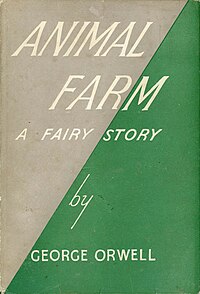 |
| First Edition Book Cover 1945 |
*CAUTION: SPOILERS*
Back in eighth grade, I was supposed to read Animal Farm by George Orwell, but in all honesty, I skipped out and watched both the cartoon movie version and the live action version of the novel. (No one rat on me to my old English teacher, please and thank you). Now, I am taking the time to read the novel and really understand it because I am older and maturing as a reader. Orwell wrote the novel between November 1943 and February 1944, when the UK was in its wartime alliance with the Soviet Union and the British people and intelligentsia held Stalin in high esteem, a phenomenon Orwell hated. Thus, it becomes very apparent that Orwell makes many invective criticisms of Soviet Russia by using his characters as allusions and allegories of major parts of the USSR.
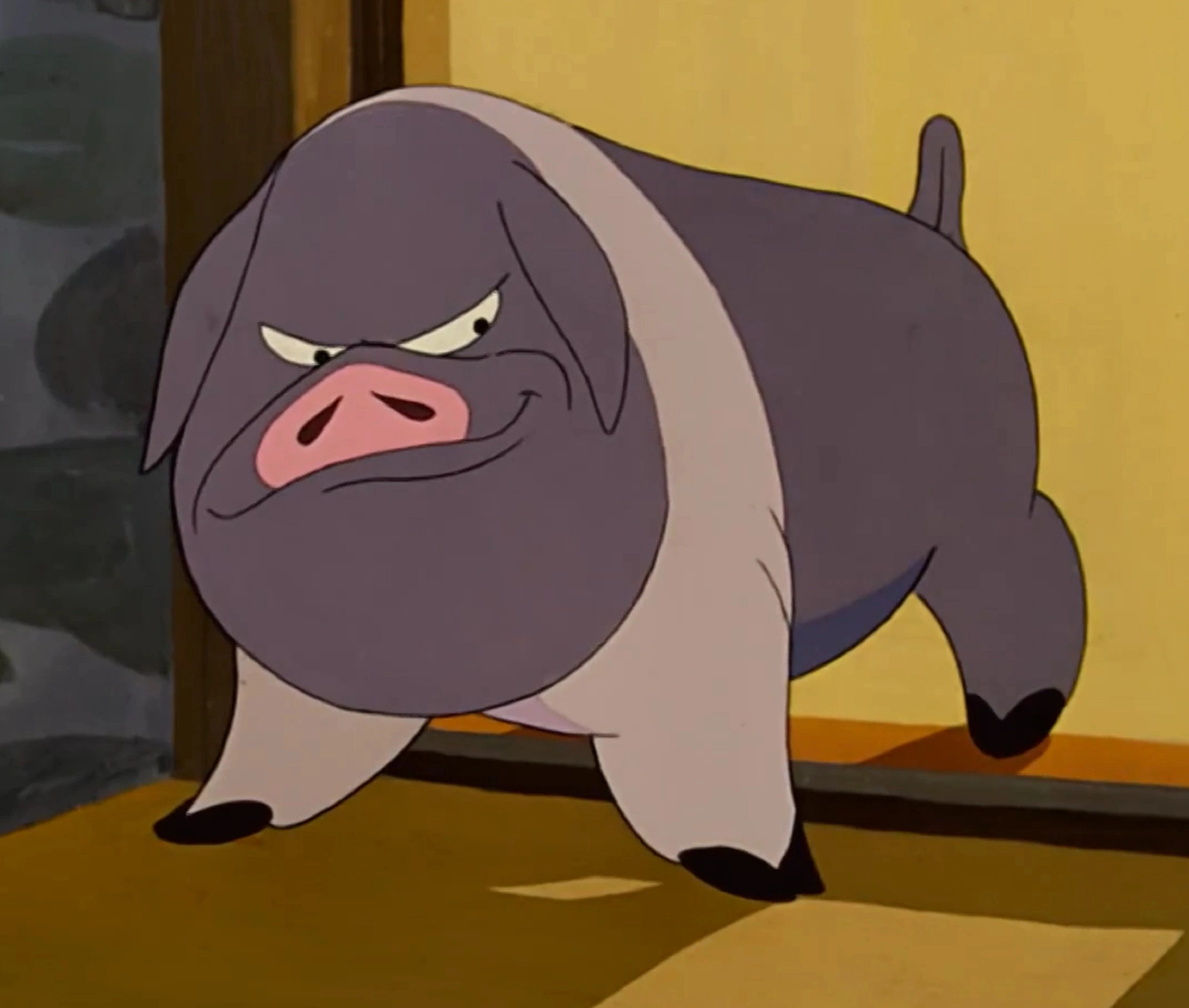

Napoleon
Napoleon is representative of Stalin. Napoleon is the antagonist of the book and uses the revolution and the power he gains for his own selfish desires. Napoleon has many of the animals executed after they confess to their crimes. ‘Napoleon now called upon them to confess their crimes. They were the same four pigs as had protested when Napoleon abolished the Sunday Meetings. Without any further prompting they confessed that they had been secretly in touch with Snowball ever since his expulsion, that they had collaborated with him in destroying the windmill...When they had finished their confession the dogs promptly tore their throats out’ (page 56). This is an allusion to the show trials by Stalin in Russia in the 1930's, where political opponents were eliminated after an apparent trial and confession. As the narrative develops Napoleon’s rule becomes more atrocious, as he becomes a dictator, using terror and propaganda to control the other animals and prevent a second revolt against him.
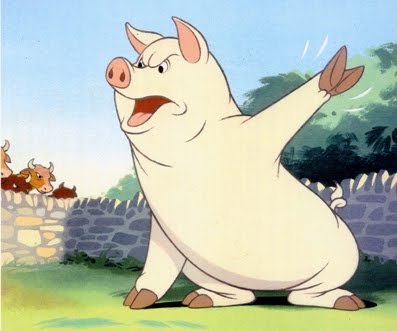

Snowball
Snowball is representative of Trotsky, one of Stalin’s biggest political rivals in Russia before he was exiled from the USSR in 1927. Like Trotsky, Snowball is also exiled because he was a political threat and rival. “These two disagreed at every point where disagreement was possible’’(page 31). Orwell does not present Snowball as the protagonist or the good one; Snowball is portrayed as being unrelenting and brutal too. When Boxer expresses regret at killing a human, Snowball says “War is war. The only good human being is a dead one’’ (page 28). This is a reference to Trotsky’s ruthlessness while turning the Red Army into a fighting force in the Russian Civil War. Napoleon's dogs later chase Snowball off the farm-which is similar to Stalin ridding the USSR of Trotsky for the threat he posed to Stalin’s power.


The Dogs
The dogs represent the secret police or the NKVD in the Soviet Union. The dogs are important to Napoleon in maintaining his power and preventing another revolution. They aid in Napoleon's executions and enforce his laws. The dogs eliminate the greatest threat to Napoleon’s power as ‘nine enormous dogs wearing brass-studded collars came bounding into the barn. They dashed straight for Snowball, who only sprang from his place just in time to escape their snapping jaws...’ (page 35-36). For their loyalty, the dogs are treated better by the pigs than the other animals on the farm. They are part of Napoleon’s campaign of terror to maintain his control over the farm.
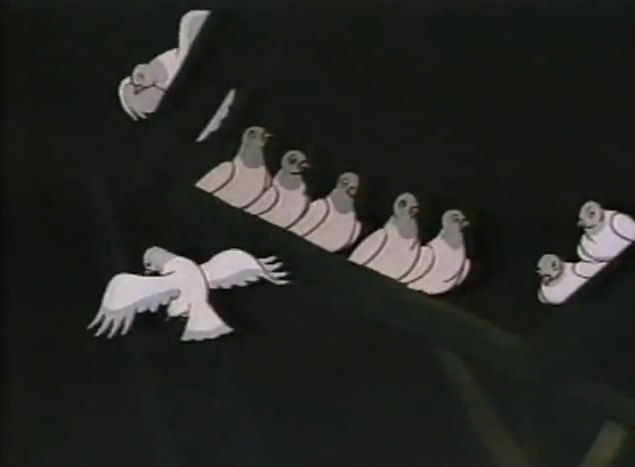

The Pigeons
Although the pigeons are minor characters, they represent the Soviet Union’s propaganda as a means to manipulate and indoctrinate the public. The Soviet Union under Stalin, often boasted of great achievements both economically and socially despite internal problems. Snowball and Napoleon use the pigeons to spread propaganda and send messages to other farms.
If you want to skip out on the book like I did, or would just like to see the movie here’s the original animated film!

I really love how you use quotations i your post. That's something I've never though of doing before. The structure of you post is very easy to understand. I like how you have a focus rather than just talking about the entire book on a broad spectrum. I can imagine that the symbolism in this book is extremely heavy. My one criticism is that you probably could have benefitted by adding in a little more analysis rather than summary. But, to be honest, I'd really like to read this now!
ReplyDelete